The Most Common Mistakes When Buying Pickleball Shoes
Posted October 22, 2026 Revised October 22, 2026 4-minute read
By the Bien Chaussé editorial team.
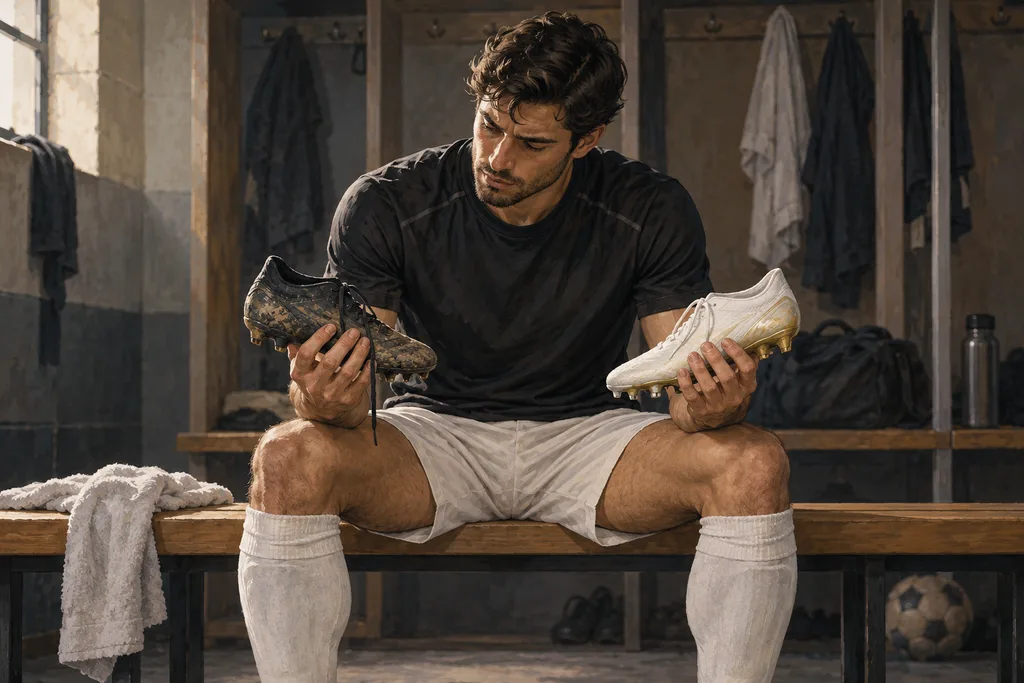
Let me open “The Most Common Mistakes When Buying Pickleball Shoes” by telling you how I'll proceed. You'll learn to spot the classic traps: wrong size, running shoes, picking by looks alone. The talk breaks down like this: the basics to understand, what to watch closely in practice, and the approach to take.
The Basics to Understand
Here's the basic rule. The AAPSM links wearing worn-out shoes to problems like shin splints, plantar fasciitis, stress fractures and heel spurs.
Here's the principle. Poorly fitted equipment, whether paddle or shoes, causes compensating muscle strain. Mass General Brigham therefore recommends well-fitted shoes and a well-fitted paddle.
Here's another principle. A running shoe is built for linear movement, so it suits pickleball's side-to-side movement poorly, according to a podiatrist cited by the Globe and Mail. Keep that idea in the background for what follows.
For everyday use, a pickleball paddle appears in the Rally catalog, as a reference point.
What to Watch Closely in Practice
Watch out for this trap. An athletic shoe wears out its midsole first (EVA or polyurethane). Once the midsole loses its rebound, the shoe no longer cushions properly, even if the outsole looks intact.
The Approach to Take
Here's the sequence, top to bottom.
- A podiatrist cited by the AAPSM calls the shoe an inexpensive preventive investment. Replacing it before it's too worn is part of preventing injuries.
- A coach we interviewed advises trying shoes on before you buy them. If one spot on your foot bothers you in the fitting, it won't get better later.
What Size Should You Choose to Avoid Blisters?
Here's the measured benchmark. The SFIA reports that 13-24 year olds have the highest pickleball participation rates in the United States, and that women made up 42.9% of players in 2025.
The sport is also in the spotlight. Pickleball was showcased at Roland-Garros in June 2024, and FFT president Gilles Moretton expected rapid growth in France, similar to the United States.
On to the reference figures. In January 2026, the FFT reported about 30,000 pickleball players in France, 3,500 licenses and 850 FFT clubs offering the sport.
Should You Buy More Cushioning Just in Case?
Here's the framework to know. The 2025 USA Pickleball rulebook says a player may be asked to change clothes if the outfit is judged inappropriate, notably if it resembles the color of the ball. Graphics must be “in good taste.”
Here's the measured benchmark. In the United States, 24.3 million people played pickleball in 2025, up from 4.2 million in 2020, according to the SFIA's 2026 report.
Note this provision. The French Tennis Federation added pickleball to its bylaws in 2024 and produced official documents: competition rules, rules of play, equipment specifications and a competition guide.
Why Try Shoes On at the End of the Day?
As for the rules that apply, starting September 1, 2026, a single “Club FFT” license replaces the discipline-specific licenses (padel, pickleball, beach tennis). It costs €33 for adults and €23 for ages 7-18, with access to all disciplines.
In the figures, per the 2025 USA Pickleball rulebook, the court is a rectangle 20 feet by 44 feet (6.10 m by 13.41 m).
Before We Wrap Up
We've now covered the basics to understand, what to watch closely in practice, and the approach to take, in the order I announced. Run through the list of takeaways once more before you close this page.
See also
- How to Choose Pickleball Shoes: The Complete Guide — Criteria for choosing a pickleball shoe. Game by game, you get the guiding principles, the articles to explore and how to get started.
- Cleaning and Drying Your Pickleball Shoes Without Damaging Them — You'll know how to care for your shoes after every session to preserve the sole and materials. This walkthrough covers how to clean the sole.
- Sharing the Court With Tennis: Matching Your Shoes to Hard Courts — Here's how you can play on a tennis court marked for pickleball without damaging your shoes or your joints, explained part by part.
- Tennis, Padel, or Badminton Shoes: Which Ones Should You Keep for Pickleball? — You'll learn whether your current racquet-sport shoes will do or whether a dedicated pair is worth buying. Criteria ranked by importance.
Sources
- AAPSM : remplacer ses chaussures de sport —
- Pickleball injuries (version française) — Common injuries (ankle, Achilles tendon, elbow, wrist), the importance of a well-fitted shoe suited to the surface, and prevention tips. Source access checked on 2026-10-18.
- The Globe and Mail : conseils d'experts pour choisir ses chaussures de pickleball —
- SFIA, rapport 2026 sur le pickleball — Participation in the United States: 24.3 million players in 2025, breakdown by age and share of women. Source access checked on 2026-10-18.
- Pickleball well received at French Open, France expecting rapid growth — The FFT's adoption of pickleball, the 2024 demonstration at Roland-Garros, and the approximate number of courts at the time. Source access checked on 2026-10-18.
- Assemblée générale de la FFT, les décisions (janvier 2026) —
- Règles USA Pickleball 2025, section 2 : terrain et équipement — Rule 2.G.3: shoes must have soles that don't mark or damage the playing surface; the tournament director's authority over attire. Source access checked on 2026-10-18.
- L'accompagnement de la FFT dans l'essor du pickleball —
The information on this site is general and doesn't replace the advice of a doctor, physical therapist or podiatrist, especially in case of pain, an old injury or an unusual foot.
The site sells no shoes and publishes no paid rankings. Models mentioned are cited for information only.
What We Checked.
This article draws on 8 sources: 6 official or institutional sources and 2 press articles.
Facts checked against their sources on October 18, 2026.
The method we follow: Notre méthode.